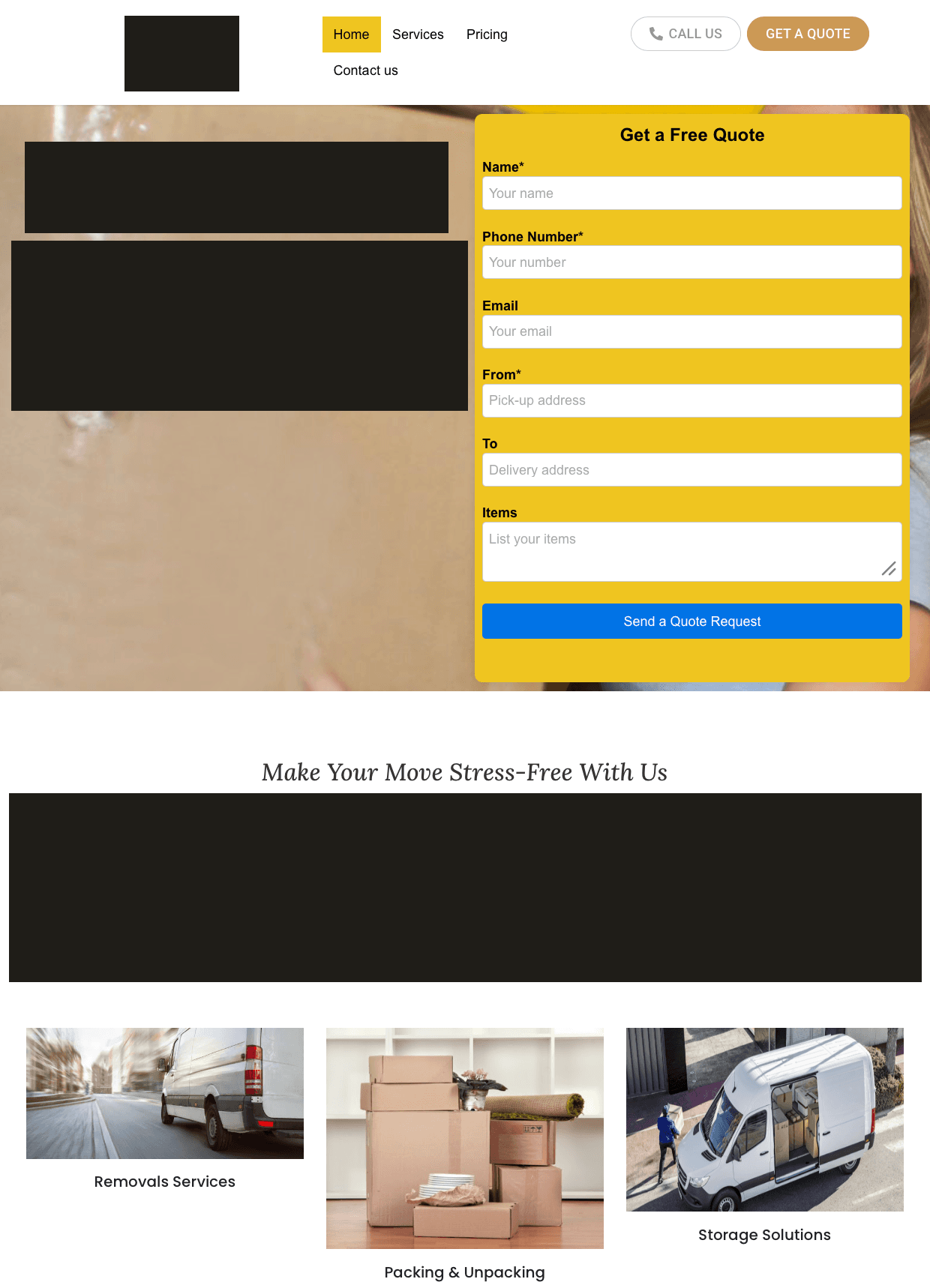
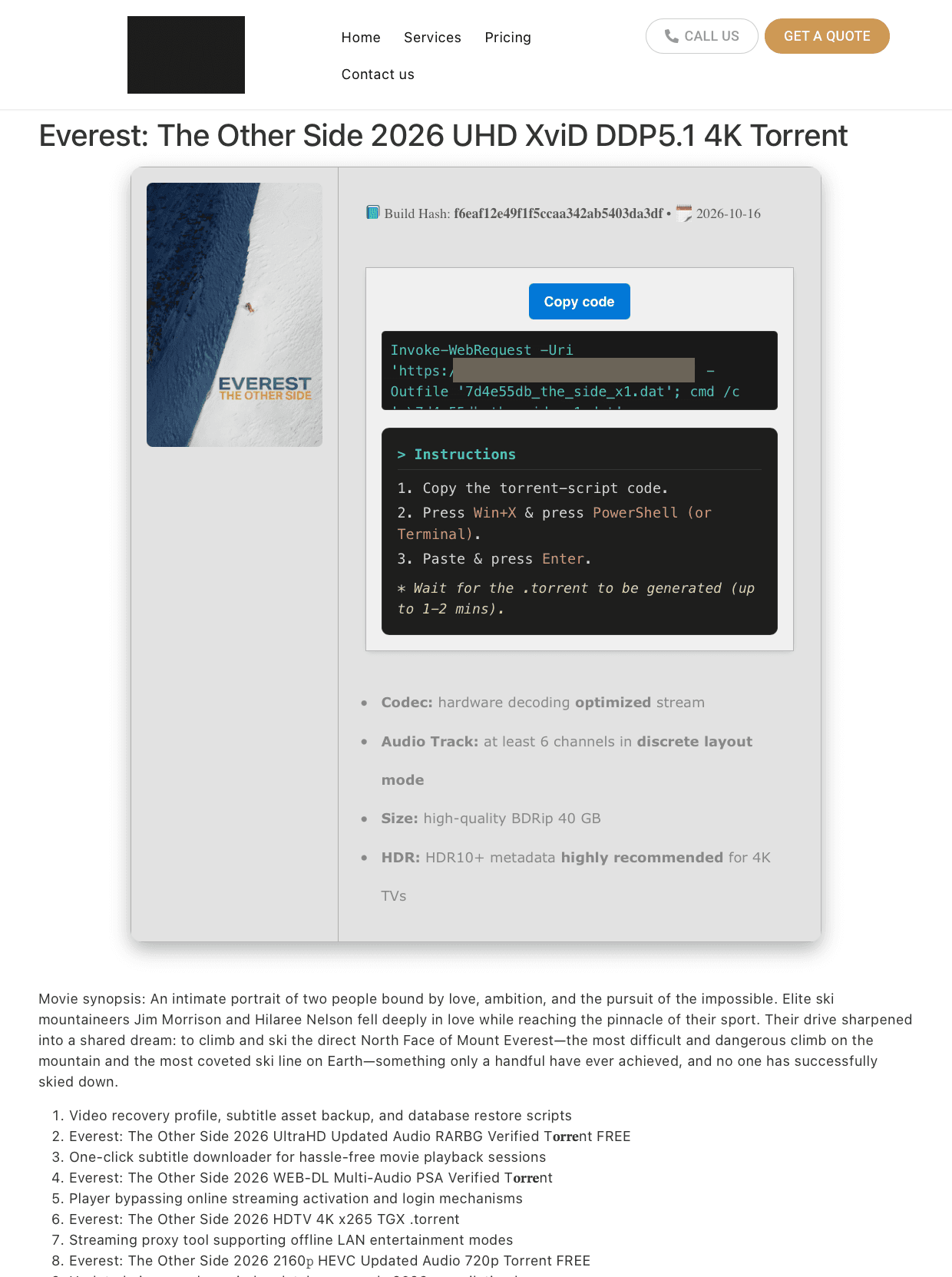
Same site, same theme. The homepage on the left, the lure on the right. I've blacked out everything that names the business or the payload host.
What ClickFix is
- The filename comes from the title. "the_side" is lifted from "The Other Side", which suggests a script generates every lure from a template.
- The keywords use Unicode lookalike letters. The "orre" in several of the "Torrent" lines is mathematical bold, not normal text, which is very likely there to slip past keyword spam filters.
- "Wait up to 1 to 2 mins" is probably there to stop the victim closing the window while the payload runs.
Pulling the thread
- Site search. Searching the site for "torrent" returned eight pages of results, the oldest from 11 September 2026.
- The author archive. The lure's page metadata named its WordPress author, and that author's archive had posts as recent as 7 November, the day before I found it. Cracked games, keygens and "Full-Activated" software sat alongside the fake films.
- The sitemap. WordPress publishes a sitemap of every post by default. This one listed 294 posts between 11 September and 7 November, and not one of them was about removals. The business's real content all lived in Pages. Every single post on the site was spam.
How did they get in?
- wp2shell, the WordPress core chain (CVE-2026-63030 and CVE-2026-60137) that gives remote code execution before login through the REST API batch route, with no plugins needed. It was disclosed and patched on 17 July 2026 and fixed in 6.9.5 and 7.0.2 (Tenable's FAQ). Automatic updates went out, but plenty of self-managed sites never get them.
- A vulnerable plugin. Plugins account for the vast majority of WordPress vulnerabilities (Wordfence), and I have no idea which ones this site ran.
- A stolen or guessed admin password. One documented campaign brute-forced wp-admin specifically to publish SEO spam, and infostealer logs are a major source of WordPress logins.
Reporting it
| Who | How | What happened |
|---|---|---|
| The site owner | Email to the business address | No reply |
| One.com, the lure site's host | Abuse email with a screenshot | Account suspended on 11 November |
| CERT Polska, for the payload host | Email in English with a Polish summary | Said action was taken on 21 November. File still present, followed up |
| Cloudflare, in front of the payload host | Abuse form | "Could not detect any abusive or malicious content". I replied explaining the gating. No further response |
| UK NCSC | Suspicious website form | Accepted. The NCSC doesn't report outcomes |
| Google Safe Browsing | Report form, lure and payload | Submitted |
| Microsoft SmartScreen | Unsafe site form, lure and payload | Submitted |
| Netcraft | Both URLs | "No threats found", disputed |
- I didn't try to log in anywhere. Trying credentials on someone else's site is unauthorised access under the UK's Computer Misuse Act and Australia's Criminal Code, whatever your intentions.
- I didn't run vulnerability scanners against the site.
- I didn't download or run the payload.
- I didn't offer to fix it for money. "Your site has been hacked, pay me to fix it" is a classic scam email, and I didn't want to look like one.
"No threats found"
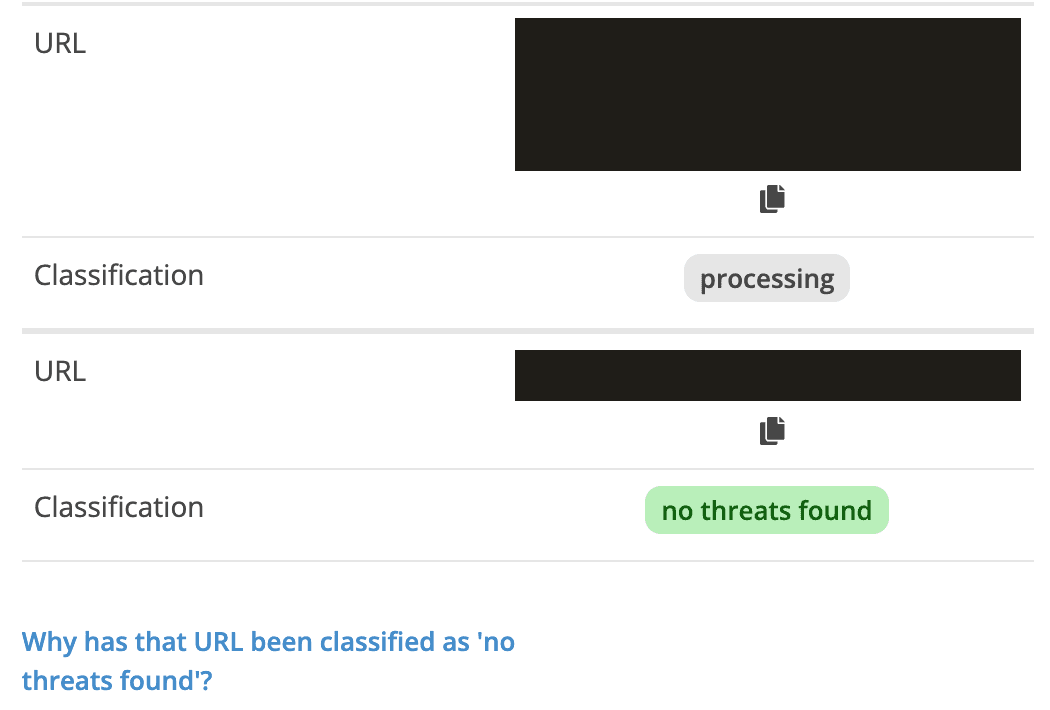
Netcraft's verdict on the payload URL, within half an hour of my report.
Both were wrong, and in a way that makes sense. The payload only goes to PowerShell, so a scanner that visits like a browser gets .!.. The lure box is injected by JavaScript when a real browser renders the page, so a plain fetch of the same URL only sees an empty "Verify" table with no command in it. The whole thing is built to beat exactly the kind of check these services run. So "no threats found" means "our scanner didn't see anything". It doesn't mean safe. I replied to Cloudflare explaining the gating and asked them to pass the report to the host and owner, and I filed a misclassification dispute with Netcraft asking for a manual review with JavaScript enabled and a PowerShell user agent. I haven't heard back on either beyond an automatic acknowledgement.How it ended
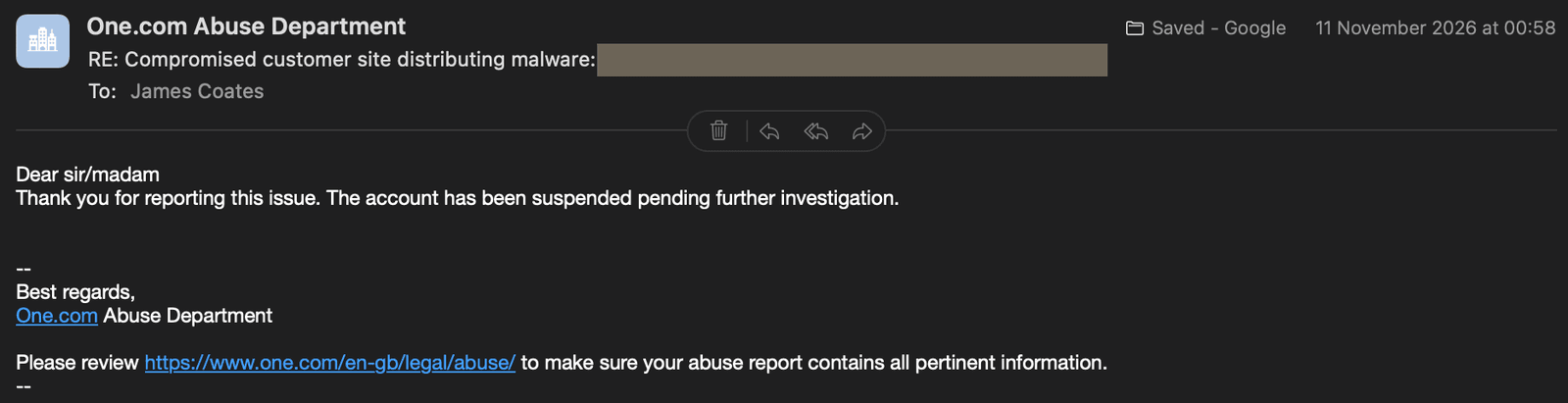
One.com, 11 November.
CERT Polska followed on 21 November and told me they had taken the necessary steps regarding the domain.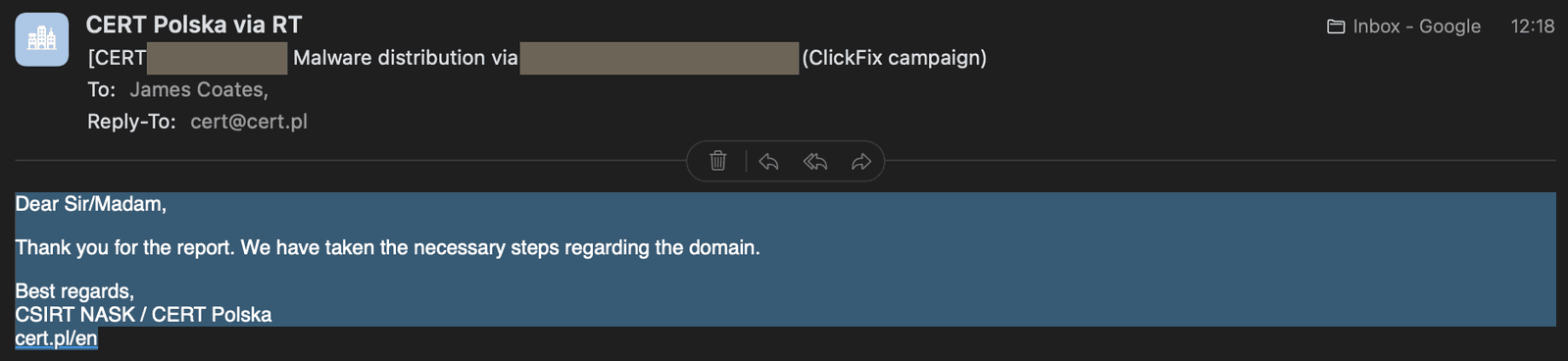
CERT Polska, 21 November.
One.com's suspension took the lure site offline. The payload file on the Polish site was still there when I checked on 21 November, so I've followed up with CERT Polska. I didn't take anything down myself. I found it, worked out what it was, and put it in front of the people who could act.What I'd take from it
- Keep WordPress, plugins and themes updated, and don't assume automatic updates are on.
- Use a unique admin password with two-factor authentication.
- Delete plugins you don't use.
- Every so often, look at your own posts and your sitemap. This business's site had 294 posts it never wrote, and the sitemap would have shown them in seconds.